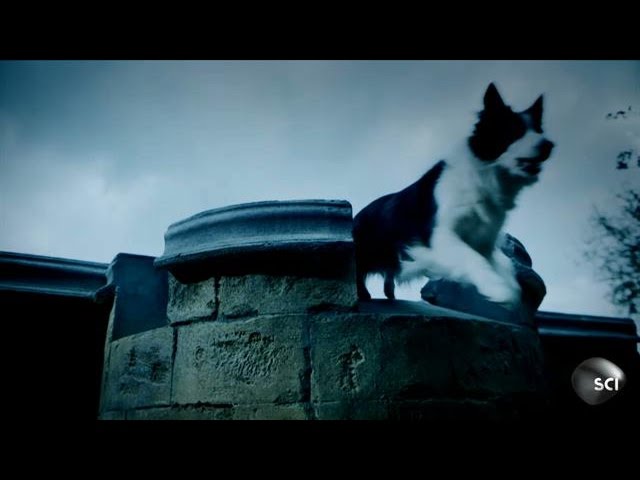

In Scotland, near an old mansion called Overtoun House, there is a stone bridge.
It looks completely unremarkable. Old. Solid. Set in quiet countryside.
But since the 1950s, something has been happening on that bridge that nobody has fully explained.
The unseen horror
Whenever people walk across it with their dogs, the dogs leap off.
Not occasionally.
Consistently.
Over 600 reported cases. Always from the same side. Always from the same location on the bridge. The fall is roughly 50 feet.
What makes it worse:
Some dogs that survived the fall and recovered were later brought back to the bridge.
They tried to jump again.
Same side. Same spot.
The theories
Scientists believe the scent of animals living beneath the bridge — mink, mostly — triggers something primal in the dogs. A hunting instinct so overwhelming that the dog simply follows it.
No visible threat. No visible danger. Just a pull so strong that the animal moves toward it without registering where it leads.
The dog is not being foolish.
It is being obedient — to the wrong signal.
Now, you might be wondering how exactly this story relates with the context of how to hear from God about your career? Don’t worry. This is where this stops being a story about Scotland and starts being a story about your career.
How most career decisions are actually made
Be honest.
How many of your career decisions were made by genuinely seeking God’s direction?
And how many were made by reading what was trending? Watching what your peers were doing? Absorbing the consensus of your social circle and calling it wisdom?
The MBA because everyone from that school was getting one.
The industry switch because someone forwarded an article about where the money was going.
The job offer accepted because declining it would have required explaining yourself to people who would not have understood.
Not wrong decisions, necessarily.
But made from the same instinct as the dog on the bridge.
A strong pull. A familiar scent. A direction that feels obvious.
And no pause long enough to ask where it actually leads.
Jeremiah 2:13 describes a generation doing exactly this — not sitting still, but building energetically, confidently, and in the completely wrong direction. “They have forsaken me, the fountain of living waters, and hewed out cisterns for themselves, broken cisterns that can hold no water.”
They were not lazy. They were busy.
That was almost the whole problem.
Why the crowd feels like wisdom
The reason popular opinion is so easy to follow is that it appears to have evidence on its side.
Everyone is moving in that direction. The people who went before you seem to be doing well. The logic is coherent. The timeline is familiar.
And if it turns out to be wrong — at least you won’t be wrong alone.
This is the exact comfort the dogs on Overtoun Bridge experience.
They are not making an individual error. They are following a pattern that has been repeated hundreds of times, by hundreds of other dogs, from the same spot. The pattern itself has become the authority.
In your career: everyone in your circle is optimising for salary at the expense of meaning, so you do the same. Everyone measures success by title progression, so you do the same. The most visible path becomes the most credible one, and any other path starts to feel eccentric rather than principled.
Proverbs 14:12 does not leave any room for comfortable interpretation: “There is a way that seems right to a man, but its end is the way of death.”
The way that seems right is not presented as an obviously bad choice.
It seems right. It has all the surface features of wisdom.
The danger is underneath the surface. In whether the direction was actually received or simply absorbed from whoever was loudest.
What it actually takes to hear from God about your career
It is less dramatic than most church services make it sound.
No thunder. No falling. Usually.
More commonly, it is a sustained accumulation of clarity — gathered through specific practices that most professionals give far less time to than they give to researching their options.
Slow down first.
The Overtoun dogs jump because the scent hits before they have stopped to read the situation. Most career decisions made in a rush, under social pressure, or against an artificial deadline carry the same risk. The clarity you are looking for does not arrive when you are moving fastest.
Separate what you want to be true from what is actually being confirmed.
Ask yourself: “Would I still be moving this way if none of the people I respect were watching?” The answer is frequently different from what you expect.
Test what you believe you are hearing.
Test it against Scripture. Against the fruit of similar decisions in your own life. Against the counsel of people who know you well enough to disagree with you.
Not people who will validate your preference.
People who will tell you what they actually see.
Jesus described this as the narrow gate: “Enter through the narrow gate. For the gate is wide and the road is easy that leads to destruction, and many enter through it. But the gate is narrow and the way is hard that leads to life, and only a few find it.” (Matthew 7:13–14)
The narrow path is not narrow because God is unkind.
It is narrow because finding it requires something the wide road does not require of anyone:
The willingness to stop and ask where you are actually going.
The most disturbing detail
The dogs on Overtoun Bridge that survived the fall and came back — they tried to jump again.
The pattern had become its own logic.
For the working professional, this is the person who burns out in a career, recovers, reflects, and then 18 months later is back in the same industry at a higher level making the same decisions.
Because they never stopped long enough to ask whether the instinct itself was the problem.
They just followed the scent again.
The question worth sitting with
The people on that bridge watching their dogs jump are not passive.
They are present. They are paying attention. They are confused.
Because the evidence in front of them does not explain itself.
The worker watching their career produce outcomes that don’t match what they intended when they started is in the same position.
Present. Paying attention. Confused.
The question that unlocks the next thing is not “What should I do next?”
It is “Where am I actually being led — and by what?”
Because the scent beneath the bridge is real.
The pull is real.
The only question is whether you paused long enough to notice it before you followed it off the edge.
How do I build the habit of seeking God’s direction before career decisions?
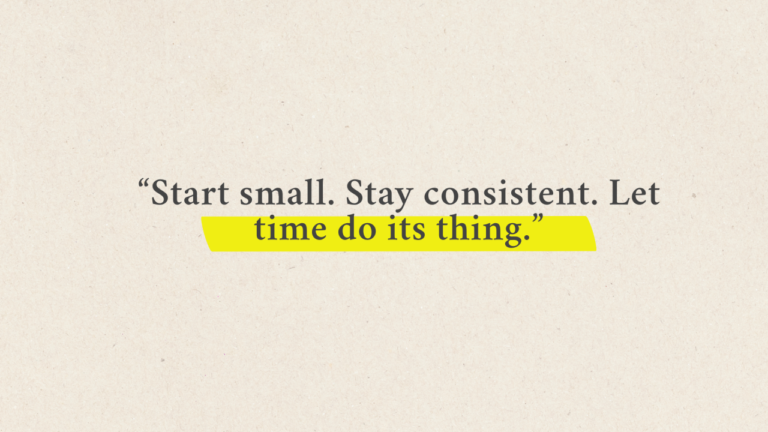
Start with the small ones. Before you respond to an opportunity, before you accept an invitation — take 24 hours and bring it to prayer with one specific question: “Is this the right thing, or just the available thing?” Over time, the pause becomes automatic. And that pause is exactly where discernment lives.
Learning how to hear from God about your career is not a one-time event. It is a practice. Join us at thetopachievers.org/join, and read real stories of people who have navigated real crossroads here.